Atradius Atrium
Get direct access to your policy information, credit limit application tools and insights.

 Group
Group
 Australia
 Austria
 Belgium
 Brazil
 Bulgaria
 Canada
 China
China
 Czech Republic
 Denmark
 Finland
 France
 Germany
 Greece
 Group
Group
 Hong Kong SAR
 Hungary
 India
India
 Ireland
 Italy
Italy
 Japan
Japan
 Lithuania
 Mexico
 Netherlands
 New Zealand
 Norway
 Poland
 Portugal
 Romania
 Singapore
 Slovakia
 Slovenia
 Spain
Spain
 Sweden
 Switzerland
 Turkey
 United Arab Emirates
 United Kingdom
 United States

2025 was an exceptional year for global tourism. International arrivals reached around 1.5 billion, surpassing pre-pandemic levels for the first time, and generating an estimated USD 1.9 trillion in visitor spending worldwide, rising to USD 2.2 trillion when passenger transport is included. Heading into 2026, the sector was widely expected to deliver another record year.
However, the escalation of the crisis in the Middle East has disrupted that trajectory. Rather than derailing demand altogether, it has triggered a redistribution of travel flows, reshaping the map of global tourism destination by destination.
The impact is uneven: some markets are losing traffic due to disrupted routes and higher costs, while others are benefiting from substitution effects as travellers redirect their plans. Demand is not collapsing, but becoming more fragile and sensitive to disruption, with rising airfares, disrupted aviation routes, and uncertainty weighing on long-haul travel. In response, consumers are showing greater price sensitivity, shifting towards closer and more accessible destinations; supporting short- and medium-haul travel, particularly within Europe and Asia.
Travel is still expected to grow in 2026 across most regions, with the notable exception of the Middle East. Atradius currently works with two potential conflict scenarios, broadly aligned with reference assessments from sources such as Oxford Economics. In our baseline scenario tourism demand in Europe and Asia is expected to rise by 8% and 12% respectively. In a downside scenario of a prolonged war those growth figures would shrink to 3% and 5%. Likely beneficiaries include Mediterranean Europe, Central and Eastern Europe, and Southeast Asia, while destinations reliant on long-haul travel, Middle East transit or intercontinental flows face greater downside risks.
So all in all, demand should hold up. The elephant in the room is supply. Global tourism is facing a significant and largely unanticipated risk, emerging upstream from pressures on energy markets and aviation fuel availability.
Aviation fuel prices have more than doubled in Europe since the start of the Middle East crisis, and secure supply does not shield from cost pressures. Airlines may adjust networks, reduce frequency, or reallocate capacity.

Air transport accounts for roughly two thirds of international tourist movements worldwide, making it the backbone of global tourism. With international travel structurally dependent on air connectivity, disruptions in jet fuel supply are unlikely to ground fleets altogether. However, they can constrain capacity, push up prices and limit route availability. The result is a tighter and more expensive system, particularly during peak periods, where supply rather than demand may become the binding constraint.
When crude oil supply is disrupted or logistics are constrained, refined products are not affected equally. Diesel and gasoline are essential for transport, agriculture, and broader economic activity. Aviation fuel, by contrast, is more easily deprioritised, as it primarily affects airlines and long-haul travel, making it more exposed to supply adjustments when conditions tighten.
In this context, jet fuel prices have more than doubled since the beginning of the year, inventories in key hubs have declined, and supply chains have become more complex and less predictable. What initially appeared as a geopolitical risk is now translating directly into operational and financial pressure across the aviation system.
As early as March, the International Air Transport Association (IATA) warned of growing strains in jet fuel supply. Should these conditions persist, airlines may face increasing constraints in securing fuel at stable prices and volumes, particularly in Europe, which relies heavily on imports.
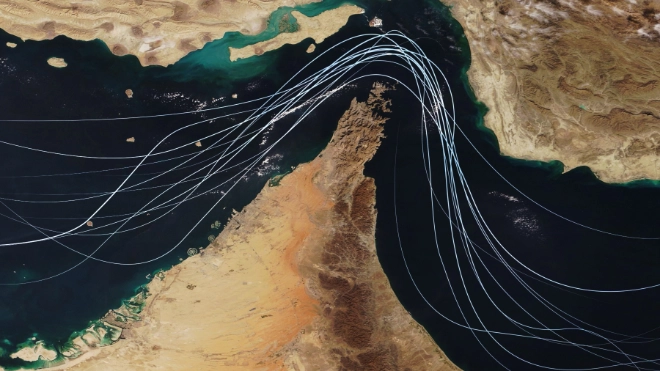
Before tensions in the Strait of Hormuz intensified, supply-side risks in aviation were not considered a central concern. Industry surveys at the start of 2026 focused on geopolitics, inflation and regulation, while fuel-related constraints on air transport barely featured. The current situation illustrates how quickly a peripheral risk can move to the centre when it affects a critical input such as energy.
For now, the situation is best characterised as a price shock rather than a physical supply disruption. Jet fuel is one of the largest cost components for airlines, typically accounting for 25–30% of operating costs. A sharp increase therefore has immediate consequences: margin compression, higher fares and fuel surcharges, reduced coverage of less profitable routes, and greater optimisation of load factors and fleet deployment.
Some operators have already reduced capacity or cancelled marginal routes, not because fuel is unavailable, but because it has become too expensive to sustain previous levels of activity. The risk is not that aviation suddenly stops, but that it becomes selectively constrained, with fewer flights, higher prices and more uneven connectivity.
Persistently high jet fuel prices are placing particular pressure on long-haul destinations and reinforcing the shift towards regional travel patterns. Demand is expected to move towards shorter distances, with stronger intra-regional flows and, where possible, greater use of alternative modes such as rail. However, it will be critical that the concerns raised by IATA in March regarding fuel availability do not materialise. Maintaining sufficient capacity is essential to ensure that the sector can respond to this reorientation of demand.
Leading airlines remain relatively confident about short-term fuel availability for the summer holiday season and do not expect large-scale cancellations. Margins are the main concern, especially for smaller and regional players.

Europe remains the centre of gravity for global tourism, accounting for 52% of international arrivals. Asia follows with 22%, ahead of the Americas at 14%, while the Middle East and Africa represent smaller shares. This position makes Europe particularly exposed to current pressures, not only due to its scale but also because of its dependence on imported energy.
Although efforts are underway to diversify supply, including increased imports from alternative producers and maximised refining output, the situation remains sensitive to external shocks. Markets with greater domestic energy production and refining capacity are relatively better positioned to absorb volatility.
Spain illustrates this asymmetry clearly. As Team Leader Large Buyer Unit in Spain, Rubén del Río, explains: “Spain enters the summer tourist season in a strong position, thanks to its high refining capacity and integrated logistics chain, which enable it to produce jet fuel from crude and reduce reliance on the Persian Gulf. Based on current data, both operators and authorities rule out supply disruptions, including shortages or rationing, reflecting this advantage in fuel availability.”
However, this does not shield it from indirect effects. As del Río adds: “Aviation fuel prices have more than doubled in Europe since the start of the Middle East crisis, and secure supply does not shield airlines from cost pressures. If other European markets face tighter conditions, airlines may adjust networks, reduce frequency, or reallocate capacity. This would affect inbound tourism flows, even if local fuel supply remains stable. Rising costs are also likely to translate into higher ticket prices, with potential implications for demand.”
According to Nicola Harris, Senior Underwriter in the UK, fuel supplies remain stable in the short term, although margin pressures are set to intensify. “Leading airlines remain relatively confident about short-term fuel availability for the summer holiday season and do not expect large-scale cancellations. The more immediate concern is margins, with profits likely to be significantly reduced even where hedging arrangements cover 70–90% of fuel needs in the near term. While larger carriers are better positioned to absorb this pressure, risks are more pronounced for smaller and regional players, which have more limited capacity to adapt and endure.”

In Germany, the authorities have also issued reassuring messages since April, stating that the supply of kerosene is currently secure and that no shortages are expected. As Senior Underwriter in Germany Jessica Pestiess, explains: “There may be some flight cancellations over the summer, but overall no major supply issues are anticipated. Germany has the advantage of relying less than other European markets on imported jet fuel. In a worst-case scenario, the government would likely step in to support major airlines and airports. However, it is unclear whether smaller or regional operators would receive government assistance."
At present, there are no signs of a material increase in credit risk in the air transport sector, although the situation requires close monitoring. Airlines’ resilience will depend largely on their financial strength, fuel hedging strategies, and pricing power.
Carriers with strong balance sheets and robust hedging coverage are better positioned to absorb sustained cost pressures, while weaker players face increasing strain if high fuel prices persist. Exposure is uneven across the sector: large airlines typically benefit from long-term contracts and hedging arrangements that provide short-term protection, whereas smaller and low-cost carriers are more reliant on the spot market and therefore more vulnerable to price volatility.
The rest of the tourism value chain is not immune. Tour operators, travel intermediaries, hotels reliant on long-haul demand, and transport and service providers with high fixed costs all face a more challenging environment. Businesses operating in highly seasonal markets or with limited pricing flexibility are particularly exposed to margin compression and tighter cash-flow conditions.
That said, impacts will remain uneven. Segments linked to short-haul and domestic travel are likely to prove more resilient, benefiting from demand reallocation as travellers adapt to higher prices and reduced connectivity.
The current situation does not point to an abrupt halt in global tourism, but it does expose a structural vulnerability. Supply-side constraints, particularly in energy, are proving capable of reshaping the sector as much as demand shocks. If the disruption is temporary, the impact should remain contained, reflected mainly in higher costs and selective capacity adjustments. However, if constraints persist, the sector could face a more prolonged period of reduced connectivity, higher prices, and shifting travel patterns.
In this environment, Atradius continues to monitor developments closely, identifying early warning signals across sectors and markets, and working proactively with clients to help them navigate evolving risks.
To explore how to strengthen your own credit risk strategy, get in touch with us and see how we can help you stay ahead.