Atradius Atrium
Get direct access to your policy information, credit limit application tools and insights.

 Group
Group
 Australia
 Austria
 Belgium
 Brazil
 Bulgaria
 Canada
 China
China
 Czech Republic
 Denmark
 Finland
 France
 Germany
 Greece
 Group
Group
 Hong Kong SAR
 Hungary
 India
India
 Ireland
 Italy
Italy
 Japan
Japan
 Lithuania
 Mexico
 Netherlands
 New Zealand
 Norway
 Poland
 Portugal
 Romania
 Singapore
 Slovakia
 Slovenia
 Spain
Spain
 Sweden
 Switzerland
 Turkey
 United Arab Emirates
 United Kingdom
 United States
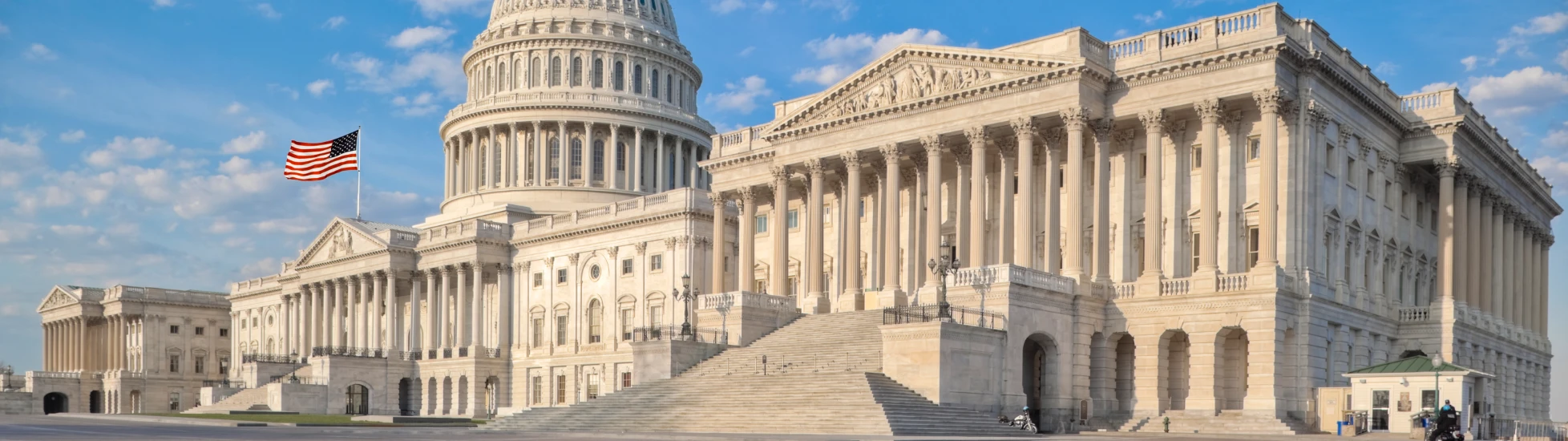
The US Supreme Court decision invalidating most tariffs imposed under the International Emergency Economic Powers Act (IEEPA) marks a significant legal reset for US trade policy. While it removes about 75% of existing tariffs immediately, it does not signal a retreat from protectionism. Instead, it (re-)introduces a phase of heightened policy uncertainty, legal experimentation, and short term volatility in trade flows.
The Court reaffirmed that the power to tax rests with Congress, ruling that IEEPA does not authorise broad, economy wide tariffs imposed at presidential discretion. As a result, roughly 75% of the USD 2 trillion in tariffs (those imposed under IEEPA) were invalidated.
The ruling wiped out the “Liberation Day” tariffs and several politically motivated tariffs, ranging from 10% to 50%, including those targeting China, Mexico, Canada, Brazil, and India under specific political rationales. These are harder to reimpose without Congressional approval as they cannot easily be recreated under alternative statutory authorities.
While IEEPA tariffs were removed, the sector specific tariffs imposed under other legal authorities like Section 232 (e.g. steel, autos, copper) remain intact.
The US Supreme Court decision marks a significant legal reset for US trade policy. While it removes about 75% of existing tariffs immediately, it does not signal a retreat from protectionism.
President Trump also announced directly after the Supreme Court decision a 10% across-the-board tariff under Section 122, citing a balance-of-payments emergency, which came into effect on 24 February 2026. This 10% tariff on most US imports under Section 122, on top of the existing tariffs brings the US’s effective tariff rate to 11.6%, from 15.3%.
Since signing the executive order for the 10% tariff, President Trump has announced an increase to 15% (its upper limit) but it’s not yet clear if and when that will be increased. Moreover, this replacement is temporary, expiring automatically after 150 days. During this window, the administration will be exploring longer term legal options (e.g. Sections 301 or 232).
The administration is already pursuing alternative legal routes to impose tariffs. IEEPA was attractive due to its speed and executive discretion, but the administration has alternative legal routes. One dilemma is that the other laws involve longer review periods of 3-8 months, which creates a lag but not a policy reversal.
The ruling forces the president to actively choose which tariffs to reimpose, rather than relying on emergency powers. It reduces the potential for tariffs as negotiating tools as well. But overall, the window of uncertainty has widened.
The ruling complicates existing trade deals. The EU–US agreement, with its agreed 15% cap, becomes problematic if the new 10% tariffs stack on top of most favoured nation (MFN) rates. This would raise tariffs above the cap on up to 8% of EU products, while the scope expands to almost all imports. The uncertainty and undermining of the nature of the deal reached last July has prompted European officials to postpone its planned vote on the agreement. Countries such as Japan and India that offered investment commitments in exchange for tariff relief now face a highly uncertain policy environment.
Effectively the removal of IEEPA tariffs is hurting traditional US allies the most.
Effectively the removal of IEEPA tariffs is hurting traditional US allies the most. This contrasts with some boost for countries that did not reach any trade deal with the US. In the short term, countries like Brazil and China emerge as major beneficiaries, with their effective tariff rate dropping sharply – from 26.3% to 10.8% in Brazil and from 36.8% to 26.9% in China. India, Thailand and Vietnam who had high IEEPA rates will also see substantially lower tariffs.
The impact on Mexico should be limited as USMCA-compliant goods remains exempt. The ruling also weakens the president’s credibility to withdraw from USMCA, reducing leverage in renegotiations this year. Beyond Mexico and Brazil, the decision has limited impact on other Latin American countries as long as the 122 rate stays at 10%, in line with the previous tariffs for countries like Chile and Peru.
The sectoral impact goes hand-in-hand with the geographic impact. Since especially Asian markets are seeing significant tariff decreases, sectors like textiles, leather goods and clothing will see the steepest reductions.
Markets have returned to a high uncertainty environment, ending a period of fragile predictability achieved through deals and quiet, gradual tariff relief. Companies are facing renewed uncertainty surrounding tariff regimes and legal risks, including of potentially collecting IEEPA refunds.
The uncertainty will continue to undermine (non-AI-related) fixed investment in the US. But it will likely boost trade front-loading again in the short term while alternative tariff tools are investigated, especially for those sectors who have seen a substantial decrease in their effective tariff rates. While this front-loading wouldn’t be as significant as last year’s ahead of the Liberation Day tariffs, it could bring trade growth higher than initially expected this year.
Markets have returned to a high uncertainty environment, ending a period of fragile predictability achieved through deals and quiet, gradual tariff relief.
The fiscal impacts are highly uncertain. First there’s the concern of whether the Treasury will need to pay back the roughly USD 140 billion collected under IEEPA. With an uncertain outlook for tariffs, both now and in the long-term, the long-term tariff revenues are also impossible to confidently predict. This could challenge the administration’s budget plans with the expansion of tax cuts this year.
Looking ahead, we expect the US’s trade war to continue but with more uncertainty. Alternative legal tools remain available but are slower to implement and legally risky. The fragile predictability through deals and tariff rollbacks to manage inflation has now broken down.
Fundamentally, once imposed, tariffs tend to be sticky. So even in the long term, a full rollback under future administrations is unlikely. We expect a continued shift toward more targeted and strategic tariffs, not a return to free trade.